How to Say Hello in Arabic: Greetings in Egypt, the Levant and the Gulf
Hear real greetings from Cairo, Amman and Riyadh: how people say hello, how to answer, what to say to someone at work, when leaving, and at Ramadan and Eid. Every phrase with native audio.
Arabanion teachers · 24 November 2026 · 12 min read
Greetings are the first Arabic you will use and the Arabic people remember you for. Arabs greet warmly and at length: a hello is usually followed by a question about your health, then your family, then your work, and each one has its own answer. Some greetings work everywhere; others tell people you know their country.
Below, you will hear three real scenes, one in each region, voiced by native speakers. Then every phrase is broken down so you can use it tomorrow.
Greetings that work everywhere
as-salāmu ʿalaykum
peace be upon you
السَّلَامُ عَلَيْكُمْ
wa ʿalaykumu s-salām
and upon you peace (the reply)
وَعَلَيْكُمُ السَّلَام
marḥaban
hello
مَرْحَبًا
ahlan wa sahlan
welcome
أَهْلًا وَسَهْلًا
As-salāmu ʿalaykum is the traditional greeting among Muslims and is used across the Arab world, by everyone from shopkeepers to newsreaders. The reply always mirrors it back. Marḥaban and ahlan are neutral and friendly, and fine with anyone.
Morning and evening: answer with light
ṣabāḥ al-khayr
good morning
صَبَاحُ الْخَيْرِ
ṣabāḥ an-nūr
morning of light (the reply)
صَبَاحُ النُّورِ
masāʾ al-khayr
good evening
مَسَاءُ الْخَيْرِ
masāʾ an-nūr
evening of light (the reply)
مَسَاءُ النُّورِ
Notice the pattern: someone wishes you a good morning, and you wish them a morning of light. Arabic greetings love to answer with something a little brighter than what they received. Once you see this, you will hear it everywhere.
In Cairo
Two neighbours meet in the morning
Karim
صَبَاح الْخِير!
ṣabāḥ il-khēr!
Good morning!
Mona
صَبَاح الْفُلّ! إِزَّيَّك؟
ṣabāḥ il-full! izzayyak?
A morning of jasmine! How are you?
Karim
الْحَمْدُ لِلّٰه. وِانْتِي عَامْلَة إِيه؟
il-ḥamdu lillāh. w-inti ʿāmla ēh?
Fine, thank God. And how are you doing?
Mona
كُوَيِّسَة، الْحَمْدُ لِلّٰه.
kwayyisa, il-ḥamdu lillāh.
Good, thank God.
Karim
يَلَّا، مَعَ السَّلَامَة!
yalla, maʿa s-salāma!
Right, goodbye!
Mona
الله يِسَلِّمَك!
allāh yisallimak!
God keep you safe!
izzayyak? (to a woman: izzayyik?)
how are you?
إِزَّيَّك؟
ʿāmil ēh? (to a woman: ʿāmla ēh?)
how are you doing?
عَامِل إِيه؟
kwayyis (a woman says kwayyisa)
good, fine
كُوَيِّس
ṣabāḥ il-full
a morning of jasmine (a warm reply)
صَبَاح الْفُلّ
In Amman, Damascus or Beirut
Popping into a friend's shop
Rami
مَرْحَبَا!
marḥaba!
Hello!
Lina
أَهْلِين! كِيفَك؟
ahlēn! kīfak?
Hi! How are you?
Rami
مْنِيح، الْحَمْدُ لِلّٰه. وِانْتِي كِيفِك؟
mnīḥ, il-ḥamdu lillāh. w-inti kīfik?
Good, thank God. And how are you?
Lina
تَمَام. شُو الْأَخْبَار؟
tamām. shu l-akhbār?
All good. What's new?
Rami
كُلُّه مْنِيح. يِعْطِيكِي الْعَافْيِة!
kullo mnīḥ. yiʿṭīki l-ʿāfye!
All good. May God give you strength!
Lina
الله يْعَافِيك!
allāh yʿāfīk!
And you too!
marḥaba
hello
مَرْحَبَا
ahlēn
hi, welcome
أَهْلِين
kīfak? (to a woman: kīfik?)
how are you?
كِيفَك؟
mnīḥ (a woman says mnīḥa)
good, fine
مْنِيح
shu l-akhbār?
what's new?
شُو الْأَخْبَار؟
yiʿṭīk il-ʿāfye
may God give you strength (to someone working)
يِعْطِيك الْعَافْيِة
allāh yʿāfīk
the reply
الله يْعَافِيك
Yiʿṭīk il-ʿāfye is a lovely habit: you say it to a shopkeeper, a waiter or a colleague in the middle of their work, a little like "thanks for your hard work". It is also common in the Gulf.
In Riyadh, Kuwait or Dubai
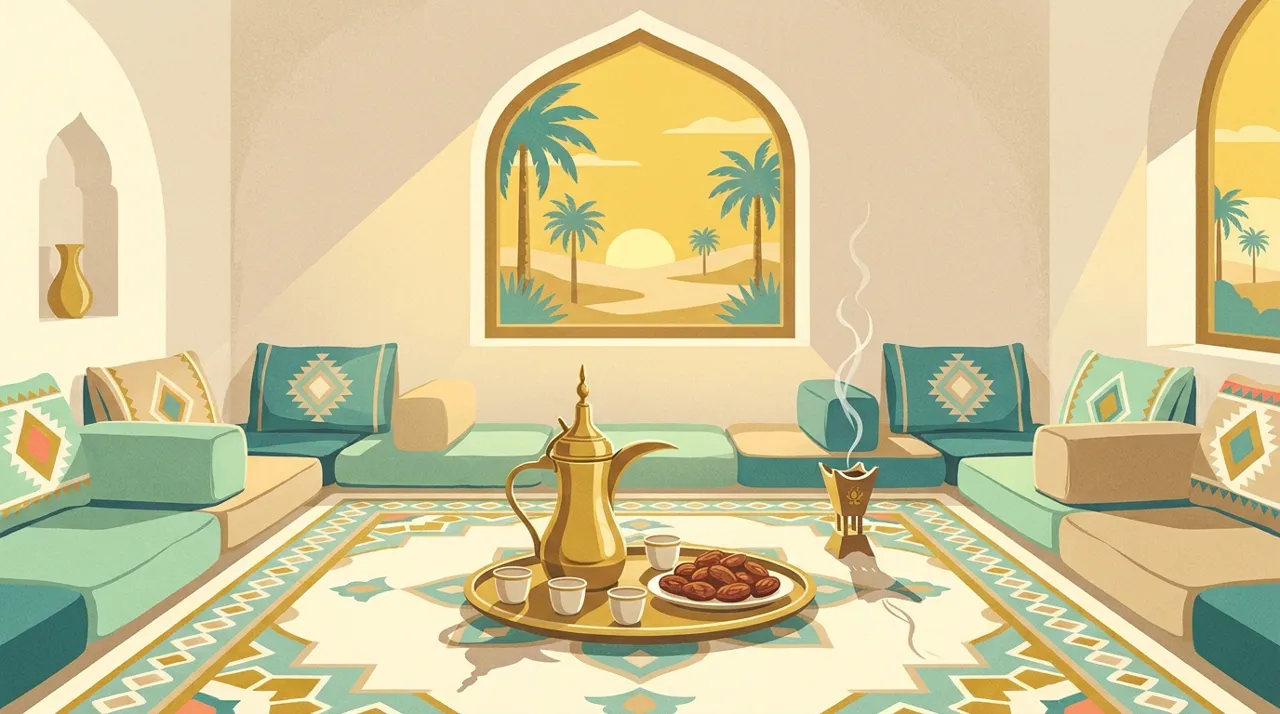
Arriving at a friend's majlis
Host
هَلَا وَالله! حَيَّاك الله.
hala wallāh! ḥayyāk allāh.
Hello and welcome! God greet you.
Guest
الله يْحَيِّيك.
allāh yḥayyīk.
God greet you too.
Host
شْلُونِك؟ عَسَاكِ طَيْبَة؟
shlōnik? ʿasāki ṭayba?
How are you? I hope you're well?
Guest
بْخِير، الْحَمْدُ لِلّٰه. وِانْتَ شْلُونَك؟
bkhēr, il-ḥamdu lillāh. w-inta shlōnak?
Well, thank God. And how are you?
Host
زَيْن. تْفَضَّلِي!
zēn. tfaḍḍali!
Good. Please come in!
hala
hi
هَلَا
hala wallāh
a warm hi, really welcome
هَلَا وَالله
ḥayyāk allāh
God greet you, welcome
حَيَّاك الله
shlōnak?
how are you? (Kuwait, Qatar, Bahrain, UAE)
شْلُونَك؟
kēf ḥālak?
how are you? (Saudi and everywhere)
كَيْف حَالَك؟
zēn
good, fine
زَيْن
bkhēr
well, fine
بْخِير
The Gulf is a family of dialects, not one. A Kuwaiti, a Saudi from Riyadh and an Emirati each have their own favourite words, so if you are moving to one country, learn its variety. The words above are understood across all of them.
Saying goodbye
maʿa s-salāma
goodbye (go with safety)
مَعَ السَّلَامَة
allāh yisallimak
the reply (God keep you safe)
الله يْسَلّمَك
fī amān allāh
in God's protection
فِي أَمَانِ الله
Greetings for Ramadan and Eid
ramaḍān karīm
Ramadan is generous
رَمَضَان كَرِيم
allāhu akram
God is more generous (the reply)
الله أَكْرَم
ʿīd mubārak
blessed Eid
عِيد مُبَارَك
kull sana w-inta ṭayyib
many happy returns (Egypt, for any celebration)
كُلّ سَنَة وِانْتَ طَيِّب
Could you answer?
Quick check
Someone says "صَبَاح الْخَيْر". The classic reply is:
Quick check
You walk into a carpenter's shop in Amman while he is working. A lovely thing to say is:
Quick check
Your Kuwaiti host says "حَيَّاك الله". You answer:
Quick check
How do you ask a woman "how are you?" in Lebanese?
Etiquette that matters as much as the words
- Greet first. Walking into a shop or a room without a greeting feels cold.
- Take your time. Asking about health and family before business is normal and polite.
- Answer with the same warmth or a little more. If someone says ahlan, you can say ahlan bīk.
- Handshakes are usually with the right hand. Between men and women, wait for the other person to offer their hand; a hand on the heart with a smile is a warm alternative.
- Use the feminine ending with women: kīfik, izzayyik, ʿāmla ēh. Getting it right is noticed and appreciated.

Ara says: If you only learn one thing from this article, learn the replies. Knowing that ṣabāḥ al-khayr is answered with ṣabāḥ an-nūr, and ḥayyāk allāh with allāh yḥayyīk, makes you sound like you belong.
Resources
- Egyptian Arabic phrases for Cairo, with audio →
- Which Arabic should you learn first? →
- Our courses →Egyptian, Levantine and Gulf Arabic

Your next step
Act out these scenes with a native teacher from the region you love. Your first 30-minute class is free.
30 minutes on Zoom
Just you and a native teacher
Speak from minute one
Use what you read here, out loud
Leave with a plan
Your level, your goal, your next steps
Free. No card needed. Takes one minute.
Quick answers
How do you say hello in Arabic?+
Marḥaban (مَرْحَبًا) and ahlan (أَهْلًا) work everywhere. The traditional greeting is as-salāmu ʿalaykum (السَّلَامُ عَلَيْكُمْ), answered with wa ʿalaykumu s-salām.
How do you say how are you in Gulf Arabic?+
Shlōnak? (شْلُونَك؟) in Kuwait, Qatar, Bahrain and the UAE; kēf ḥālak? is understood everywhere, including Saudi Arabia. A common answer is zēn, "good".
How do you say how are you in Lebanese or Syrian Arabic?+
Kīfak? (كِيفَك؟) to a man and kīfik? to a woman. The answer is mnīḥ (good) or il-ḥamdu lillāh.
What is the reply to sabah al-khayr?+
Ṣabāḥ an-nūr (صَبَاحُ النُّورِ), "morning of light". In the evening it is masāʾ al-khayr, answered with masāʾ an-nūr.
How do you say goodbye in Arabic?+
Maʿa s-salāma (مَعَ السَّلَامَة), answered with allāh yisallimak. Fī amān allāh, "in God's protection", is also common.
Can non-Muslims say as-salamu alaykum?+
Yes, it is widely used and understood as a respectful greeting. Marḥaban or ahlan are good neutral alternatives.