Why Arabic Letters Change Shape (and the 6 That Never Join)
Arabic letters hold hands like dancers in a dabke line. Learn the one rule behind their changing shapes, meet the six letters that never join, and read joined words step by step, with audio.
Arabanion teachers · 27 November 2026 · 11 min read
If you have tried to read Arabic, you have probably met this moment: you learn a letter, then you see it inside a word and it looks different. Nothing is wrong with your eyes. Arabic is a joined-up script, like handwriting, and the same letter has a slightly different shape depending on where it stands.
Here is the picture that makes it click.
Letters dance the dabke
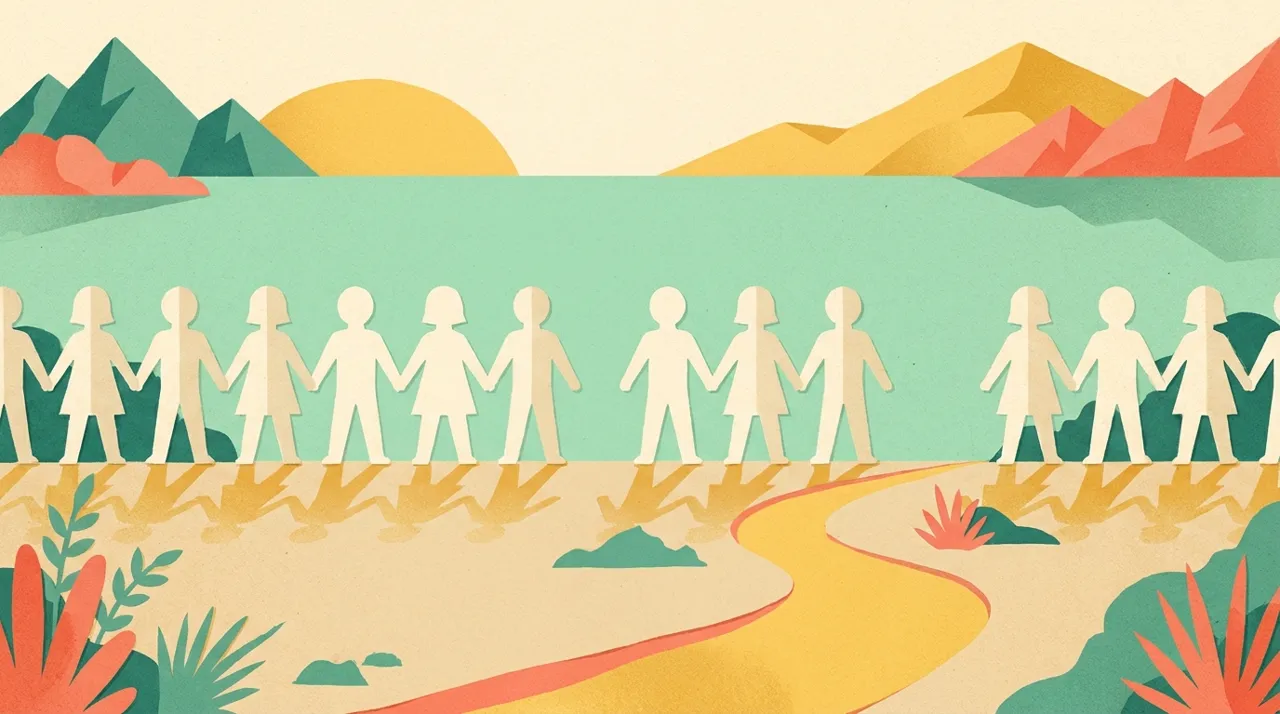
In the Levant, at weddings and celebrations, people dance the dabke: a long line of dancers holding hands, stamping together. Imagine an Arabic word as that line, moving from right to left. Each letter reaches out with its left hand to the next letter. To make that reach, a letter grows a little connecting stroke on its left side. That small stroke is the only reason letters look different inside a word.
The heart of each letter, its body and its dots, never changes. Only the hands do.
Four positions, one letter
Every letter can appear in four positions: on its own, at the start of a word, in the middle, or at the end. Read these from right to left:
alone
bāʾ on its own: the full boat, no hands
ب
start
reaches left only: the boat shrinks to a tooth
بـ
middle
holds both hands
ـبـ
end
holds the right hand only: the full boat comes back
ـب
Notice the pattern: at the start and in the middle, letters often lose their tail and become compact so they can hold hands easily. At the end and alone, the full shape returns. The dot never moves.
The letters that change the most
Most letters change only a little. These are the ones that surprise beginners:
ʿayn
the open mouth closes in the middle
ع عـ ـعـ ـع
hāʾ
four quite different shapes; learn them as a set
ه هـ ـهـ ـه
kāf
the little zigzag inside disappears at the start and middle
ك كـ ـكـ ـك
mīm
a small loop; only the end shape keeps its tail
م مـ ـمـ ـم
yāʾ
at the start and middle it looks like ب with two dots below
ي يـ ـيـ ـي
Ara says: Do not learn four shapes per letter. Learn the core shape, then ask: which side is the joining hand on? Your eyes will do the rest within days.
The six shy dancers
Six letters hold the hand of the letter before them but never reach forward to the letter after them. In our dabke line, they are the shy dancers: after each one, the line breaks and a new little line starts.
alif
ā: a straight line, no hand to give
ا
dāl
d
د
dhāl
dh as in this
ذ
rāʾ
r
ر
zāy
z
ز
wāw
w, ū
و
A quick way to remember them: they have no way to reach their left-hand neighbour without lifting the pen. Alif is a straight stick, and د ذ ر ز و all finish with a stroke that curls down or back. A gap inside a word is not a space between words; it is almost always one of these six.
dars
lesson: د and ر do not join forward
دَرْس
ward
roses: three shy letters, three separate pieces
وَرْد
bāb
door: the ا breaks the word in two
بَاب
madrasa
school: مد · ر · سة
مَدْرَسَة
zaytūn
olives: ز stands alone, then the rest joins until و
زَيْتُون
Special shapes you'll meet early
- لا (lām + alif): when ل is followed by ا they merge into one graceful shape. You see it in لَا (lā), "no", and inside words such as سَلَام (salām).
- ة (tāʾ marbūṭa): appears only at the end of a word, usually marking a feminine noun, and is said as -a: مَدِينَة (madīna, city).
- ى (alif maqṣūra): looks like ي without dots and appears only at the end, said as ā: عَلَى (ʿalā, on).
- ء and its seats: the hamza (a small catch in the throat) can sit alone ء or on a carrier: أ إ ؤ ئ. The carrier is chosen by the vowels around it; at first, just read the hamza as a short stop.
How to read a joined word, step by step
- Start at the right edge.
- Look for the gaps. Each little dancing line between gaps is easier to read on its own.
- In each piece, count the teeth and dots from right to left. Teeth with dots are usually ب ت ث ن ي; teeth without dots inside a word are often س.
- Name each letter, then add the vowel marks.
- Say the whole word, then say it again faster.
Try it on كِتَاب (kitāb, book): كـ holds تـ, تـ holds ا, ا lets go, and ب stands at the end. Two pieces: كتا and ب.
kitāb
book: كتا · ب
كِتَاب
Count the pieces
Quick check
How many separate pieces is وَرْد (roses) written in?
Quick check
Which letter breaks بَاب (door) into two pieces?
Quick check
How many pieces in مَدْرَسَة (school)?
Quick check
Where can ة appear?
Why does Arabic work like this?
Arabic grew as a handwritten script, written quickly with a reed pen. Joining letters saved time and lifts of the pen, and the shapes settled over centuries into the forms we use today. Calligraphers turned the same rules into an art form. Printed and digital Arabic keep the joining because a word with its letters separated looks as strange to an Arabic reader as "h e l l o" looks to you.
On a computer or phone you only ever type the basic letter. The software chooses the right shape for the position automatically, so you do not need four keys per letter.
Practise in five minutes a day
- Copy three words by hand every day, saying each letter as you write it.
- Find the shy letters in a short text and circle them.
- Write one letter in all four positions inside real words, not in isolation.
- Read the same short text again the next day; you will be surprised how much faster it goes.
Resources
- How to Read the Arabic Alphabet in One Week →with audio for every letter
- Our books →readers and workbooks made by our teachers
Your next step
Write your first words while a teacher watches your hand and your letters. Your first 30-minute class is free.
30 minutes on Zoom
Just you and a native teacher
Speak from minute one
Use what you read here, out loud
Leave with a plan
Your level, your goal, your next steps
Free. No card needed. Takes one minute.
Quick answers
How many shapes does each Arabic letter have?+
Up to four: alone, at the start, in the middle and at the end of a word. The core of the letter stays the same; only the joining strokes change.
Which Arabic letters do not connect?+
Six letters never join to the letter after them: alif (ا), dāl (د), dhāl (ذ), rāʾ (ر), zāy (ز) and wāw (و).
Why are there gaps inside Arabic words?+
Because one of the six non-joining letters (ا د ذ ر ز و) cannot connect to the next letter, so the word is split into pieces.
What is lam alif?+
When lām (ل) is followed by alif (ا), they are written as one combined shape: لا. It appears in the word lā (no) and many others.
Do I need to type different shapes on a keyboard?+
No. You type the basic letter and the software automatically shows the correct shape for its position in the word.