Understanding the Quran in Arabic: Where to Start
A calm, step-by-step path from reading the letters to understanding the words of the Quran: harakat, the root system, the small words that appear everywhere, and Surat al-Fatiha explained word by word.
Arabanion teachers · 27 November 2026 · 13 min read


Many of our students already recite the Quran beautifully and want the next step: to understand what they are reading, without a translation open beside them. It is one of the most rewarding goals in Arabic, and it is more reachable than people think.
The Arabic of the Quran is classical Arabic. Modern Standard Arabic (Fusha) grew from it, so the grammar and most of the vocabulary are shared. The path is clear, and it builds one layer at a time.
Step 1: read fluently with every vowel mark
The Quran is printed with full harakat, the small vowel marks above and below the letters, so every word can be read exactly. Reading them smoothly is the foundation. If you are still sounding out letter by letter, spend a few more weeks here; understanding is much easier when your eyes are no longer working hard.
Tajwīd, the rules of recitation, is a separate and beautiful discipline. You do not need to master it before you start learning meaning, and learning meaning often makes tajwīd feel more natural.
Step 2: meet the roots
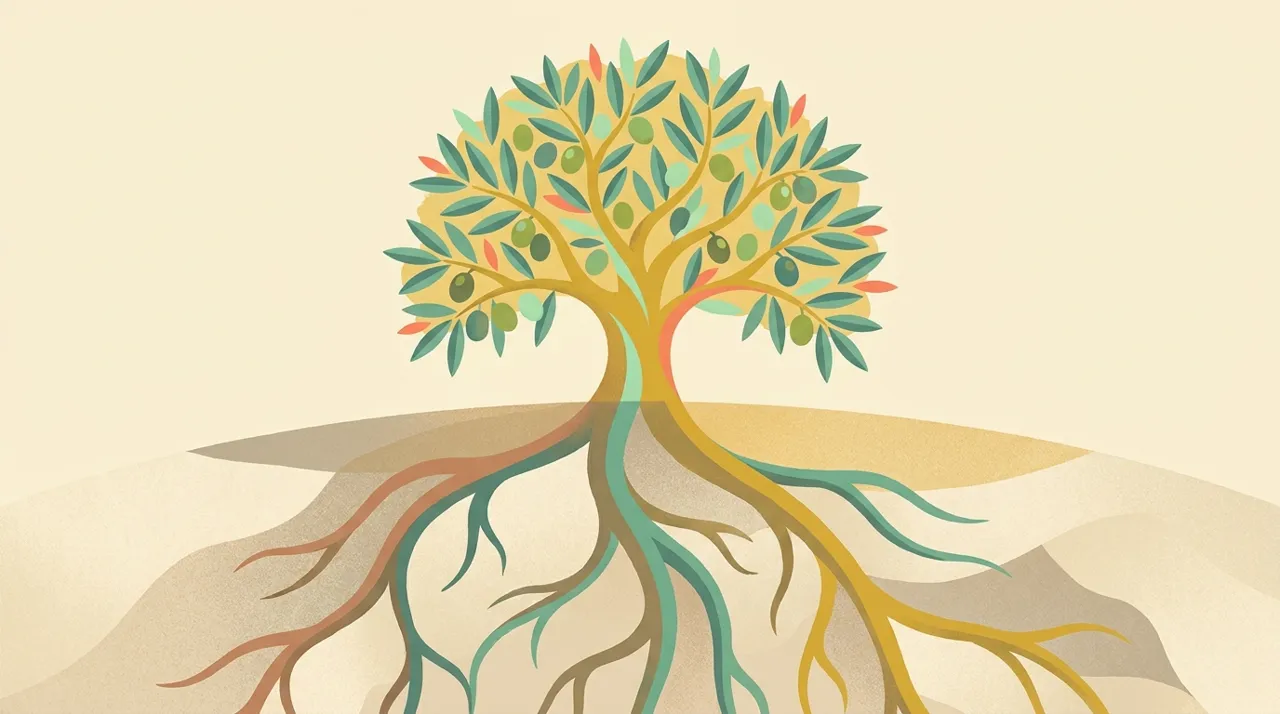
Picture an olive tree. Hidden below the ground is its root; above it grows a whole tree of branches, leaves and fruit. Most Arabic words work exactly like this. A root of three letters carries a core meaning, and patterns of vowels and extra letters grow that meaning into a verb, a noun, a person, a place or a quality.
Listen to one root, ك ت ب (k-t-b, "writing"), grow into a family:
kataba
he wrote
كَتَبَ
kitāb
a book (something written)
كِتَاب
kātib
a writer (one who writes)
كَاتِب
maktūb
written
مَكْتُوب
maktaba
a library (place of books)
مَكْتَبَة
Now two roots you meet in every recitation:
ʿilm
knowledge (root ʿ-l-m)
عِلْم
ʿalīm
all-knowing
عَلِيم
raḥma
mercy (root r-ḥ-m)
رَحْمَة
raḥīm
merciful
رَحِيم
Notice the pattern: kātib (writer) and ʿālim (scholar) share the same shape. ʿalīm and raḥīm share another. Once you know a few patterns, a new word built on a root you know is half understood before you look it up. This is the closest thing Arabic has to a secret key.

Ara says: Keep a small notebook of roots. Each time you meet a new word, write its root next to it. After a few weeks you will start recognising words you were never taught.
Step 3: learn the small words first
A handful of short words appear on almost every page of the Quran. Learning them early gives you the skeleton of each verse, so the content words have somewhere to hang:
min
from, of
مِنْ
fī
in
فِي
ʿalā
on, upon
عَلَى
ilā
to, towards
إِلَى
alladhīna
those who
الَّذِينَ
qāla
he said
قَالَ
lā
no, not
لَا
inna
indeed, truly
إِنَّ
Step 4: Surat al-Fatiha, word by word
Al-Fatiha is the best place to begin: you recite it many times a day, it is short, and it is full of roots you will meet again and again. The meanings below are simple word glosses to show how the Arabic works, not a full translation. To hear it recited, use a trusted recitation (see Resources below).
Verse 1:
bismi
in the name of
بِسْمِ
llāhi
God
اللَّهِ
ar-raḥmāni
the Most Merciful (root r-ḥ-m)
الرَّحْمَٰنِ
ar-raḥīm
the Most Compassionate (root r-ḥ-m)
الرَّحِيمِ
Verse 2:
al-ḥamdu
all praise (root ḥ-m-d, as in Muḥammad and Aḥmad)
الْحَمْدُ
lillāhi
is for God, belongs to God
لِلَّهِ
rabbi
Lord of
رَبِّ
al-ʿālamīn
the worlds (root ʿ-l-m)
الْعَالَمِينَ
Verses 3 and 4:
ar-raḥmāni r-raḥīm
the Most Merciful, the Most Compassionate
الرَّحْمَٰنِ الرَّحِيمِ
māliki
Master, Owner of (root m-l-k, as in malik, king)
مَالِكِ
yawmi
the day of
يَوْمِ
ad-dīn
the Judgement, the Recompense
الدِّينِ
Verse 5:
iyyāka
You alone
إِيَّاكَ
naʿbudu
we worship (root ʿ-b-d, as in ʿabd, servant)
نَعْبُدُ
wa iyyāka
and You alone
وَإِيَّاكَ
nastaʿīn
we ask for help (root ʿ-w-n)
نَسْتَعِينُ
Verse 6:
ihdinā
guide us (root h-d-y, as in hudā, guidance)
اهْدِنَا
aṣ-ṣirāṭa
the path
الصِّرَاطَ
al-mustaqīm
the straight (root q-w-m)
الْمُسْتَقِيمَ
Verse 7:
ṣirāṭa
the path of
صِرَاطَ
alladhīna
those who
الَّذِينَ
anʿamta
You have blessed (root n-ʿ-m, as in niʿma, blessing)
أَنْعَمْتَ
ʿalayhim
upon them
عَلَيْهِمْ
ghayri
not (of)
غَيْرِ
al-maghḍūbi ʿalayhim
those who earned anger (root gh-ḍ-b)
الْمَغْضُوبِ عَلَيْهِمْ
wa lā
nor
وَلَا
aḍ-ḍāllīn
those who went astray (root ḍ-l-l)
الضَّالِّينَ
Look at what just happened. In seven short verses you met the roots r-ḥ-m (mercy), ʿ-l-m (knowledge, the worlds), ʿ-b-d (worship, servant), h-d-y (guidance) and n-ʿ-m (blessing). Each of them appears many more times across the Quran. That is how understanding grows: one root at a time, recognised again and again. The next time you recite al-Fatiha, try to feel each root as it passes.
Find the root
Quick check
Which root do رَحْمَة (mercy) and الرَّحِيم (the Most Compassionate) share?
Quick check
Which word in al-Fatiha shares a root with ʿabd (servant) and the name ʿAbdullāh?
Quick check
You know kataba (he wrote). What would you guess kātib means?
Step 5: add the grammar you actually need
- Attached pronouns: the small endings that mean my, your, his, our, their (-ī, -ka, -hu, -nā, -hum). They are everywhere, as in ʿalayhim (upon them) and ihdinā (guide us).
- Verbs in the past and present, and how the prefix or suffix tells you who is acting: naʿbudu (we worship), anʿamta (You blessed).
- The definite article al- and how it joins nouns.
- The construct (iḍāfa): two nouns side by side meaning "the X of Y", as in rabbi l-ʿālamīn, Lord of the worlds.
- Case endings: the final vowels that show the role of a word in the sentence. You do not need to master them at the start, but noticing them helps you follow long verses.
A realistic weekly routine
- Two or three lessons a week with a teacher, focused on one short passage at a time.
- Ten minutes a day reviewing your root notebook.
- Before reciting a passage you have studied, read the word meanings once, then recite and listen for the roots you know.
- Once a week, return to an earlier passage and check how much you now understand without help.
Mistakes to avoid
- Starting with heavy grammar books before you can read fluently.
- Memorising long word lists without context. Words stick when you meet them in verses you recite.
- Relying only on translations. They are useful, but they hide the roots and the word order that give the Arabic its depth.
- Expecting to understand everything at once. Celebrate each verse you can follow; the progress compounds.
Resources
- Quran.com ↗free Quran reader with word-by-word meanings and recitations
- How to Read the Arabic Alphabet in One Week →if you are still learning the letters
- Our courses →Fusha and Quranic Arabic
- Our books →readers and workbooks made by our teachers

Your next step
Bring the surah you love most to a free 30-minute class. Your teacher will open its roots with you, word by word.
30 minutes on Zoom
Just you and a native teacher
Speak from minute one
Use what you read here, out loud
Leave with a plan
Your level, your goal, your next steps
Free. No card needed. Takes one minute.
Quick answers
Is the Arabic of the Quran the same as Modern Standard Arabic?+
They are very close. The Quran is in classical Arabic, and Modern Standard Arabic grew from it, so learning Fusha is the most direct way to understand the Quran.
Do I need to know the alphabet first?+
Yes. Reading the letters with their vowel marks is the first step. Total beginners usually learn it in a few weeks.
Where should I start to understand the Quran?+
Start with fluent reading, then learn how three-letter roots work and the small words that appear everywhere, and study passages you already recite, beginning with Surat al-Fatiha.
What is an Arabic root?+
Usually three letters that carry a core meaning, such as k-t-b for writing. Patterns built on the root give related words: kitāb (book), kātib (writer), maktūb (written).
Do I need to learn tajwid before Arabic?+
No. Tajwid (the rules of recitation) and understanding the meaning are separate skills; many students learn them side by side.
How long does it take to understand the Quran in Arabic?+
It varies with time and background. Most students start following familiar short surahs within months of regular study, and understanding grows steadily from there.